
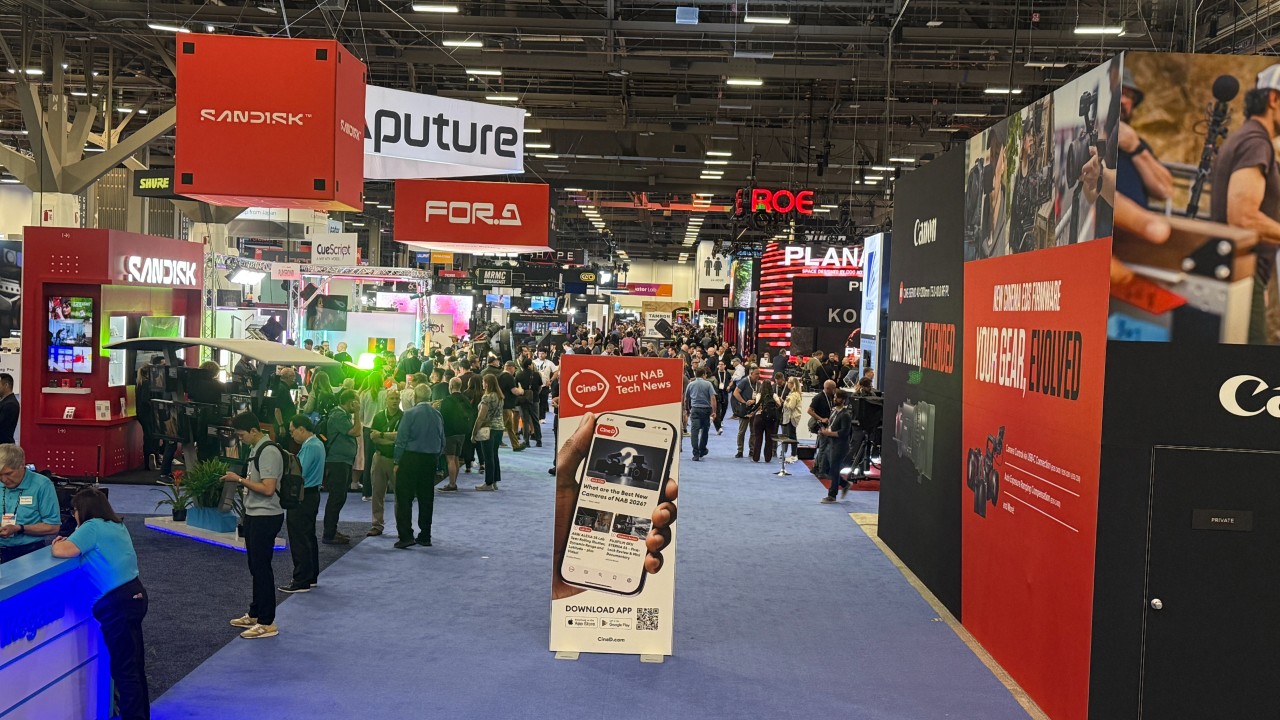
I first walked the NAB Show floor in Las Vegas in April 1998.
Tribune Broadcasting had sent us to see the future of digital television. The keynote asked a simple question:
“Digital Television Is Here — What Do We Do Now?”
Twenty-eight years later, I’m still going to NAB. Still asking versions of that same question.
But the answers look nothing like what anyone imagined in 1998.

What I’ve seen over 28 years:
1998–2009 — The transition
Tape, serial control, dedicated hardware.
NewStar. BDL prompters. Chyron graphics. RS-232 integrations.
MOS — the Media Object Server protocol — was just starting to connect newsroom systems to devices.
We were moving from tape to files.
From isolated stations to connected workflows.

2001–2006 — The early shift
We were already talking about ideas that felt abstract at the time:
- Shared newsroom systems (ENPS)
- Metadata-driven workflows
- Multi-platform content reuse
By 2005:
- 65% of graphics were built at the desktop
- 80% of editing was happening at the desktop
The hardware room was starting to disappear.

2007–2008 — The warning signs
Audience fragmentation accelerated.
Newsrooms were being asked to produce more content, on more platforms, with the same staff.
The iPhone launched.
Everything was about to change.

2010–2023 — Off the floor, building
I stopped going to NAB.
Not because it wasn’t valuable — but because I was too busy building.
While the industry went to Vegas every April to see demos, I was in the lab solving problems the show floor wasn’t addressing.
During that time:
- Cloud arrived
- IP replaced SDI
- Streaming reshaped distribution
- Mobile journalism became standard
- AI started showing up in workflows
But the core problem never changed:
How do you get the right content to the right people at the right time?
2024–2026 — Back on the floor
I came back to NAB with a different perspective.
In 1998, I went to see what was new.
In 2024, I went to evaluate whether the industry had caught up to what we had already built.

NAB 2026 — The through line most people miss
NAB 2026 is expanding on something that started nearly three decades ago.
In 1998, I was in the room when MOS was introduced — a way to let systems talk to each other and pass media objects through a newsroom workflow.
In 2026, the industry is building SOM (Story Object Model) on top of that same idea.
But this time, something fundamental is different:
AI agents are part of the system.
Systems won’t just move assets anymore — they’ll understand what the story is about and act on changes automatically.
What 28 years teaches you
The vendors change.
The protocols evolve.
The hardware shrinks.
But the problems are permanent:
- Plan stories
- Assign crews
- Share content
- Automate production
- Deliver to an audience that keeps changing how it watches
The real shift
- 1998: Hardware
- 2008: Software (still siloed)
- 2026: AI-augmented workflows on platforms you control
The tools are now so good — and so inexpensive — that the barrier to producing credible local content has collapsed.
The only real advantages left:
- Institutional knowledge
- Operational scale
- Audience trust
The industry is finally asking a better question:
Not how to create more content — but how to make it more valuable over time.
We were asking that question about metadata in 2001.
It just took 25 years to catch up.

Chris Hutchins is a broadcast technology professional with thirty years of experience managing infrastructure across television station groups. He writes about the intersection of legacy broadcast operations and emerging AI tools. All photos were taken by Chris Hutchins at Tribune television and newspaper locations over the years. Linkedin profile
Leave a Reply