
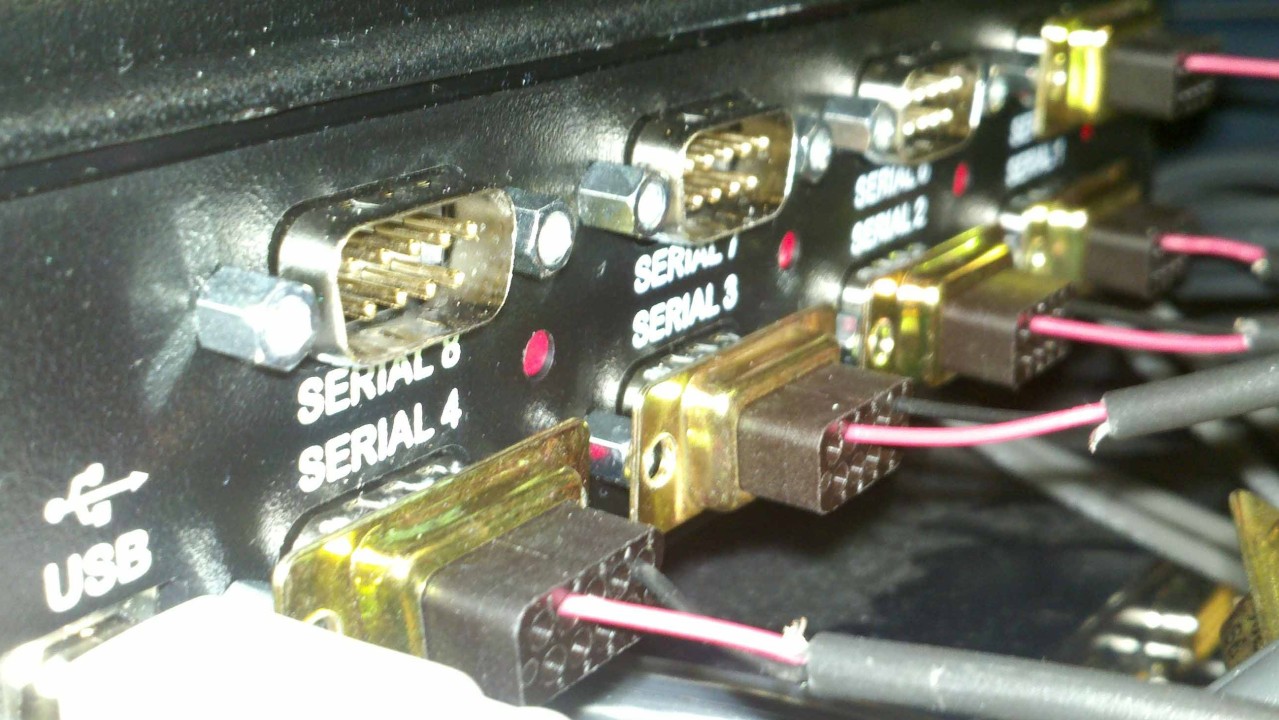
RS-232 was standardized in 1962. For decades, serial control — whether RS-232, RS-422, or vendor-specific serial implementations — was the default way to tell broadcast equipment what to do: tape machines, video servers, character generators, routers, and more. It was simple, reliable, and universal. Every vendor supported it. Every engineer understood it.
But the industry has been moving away from serial-first control for more than a decade. Here’s the timeline.

2001 — The First IP Alternative Ships
IP / VDCP moved broadcast device control off point-to-point serial wiring and onto the network. The pitch was straightforward: centralized automation, remote operation across facilities, and easier scaling without adding more serial infrastructure. The technology existed early. Adoption did not. Most stations already had decades of serial-based plant wiring in place, and it still worked.
2008–2012 — The AV Industry Starts the Breakaway
The broader professional AV world began shifting first. By 2008, integrators were openly describing control hardware as a picture of an industry in transition: Ethernet on one side, RS-232 on the other. IP control became more attractive for new projects because it enabled remote access, shared network infrastructure, centralized management, and fewer dedicated cable runs.
2015–2020 — Broadcast Finally Follows at Scale
Broadcast moved more slowly because the stakes were higher. Live-to-air systems are not where engineers like to experiment, and the installed base of serial-controlled equipment was enormous. But the pressure to move was building:
- IP media infrastructure matured, culminating in the first core SMPTE ST 2110 standards in 2017. Once media itself moved onto the network, leaving control stranded on serial looked increasingly outdated.
- Facility consolidation accelerated. Centralized operations needed to reach equipment across buildings, campuses, and cities.
- Web-based monitoring and browser-visible device status became normal expectations.
- A new generation of engineers came in with IT and networking backgrounds and saw IP as native, not optional.

2018–2020 — The Mainstream Crosses Over
By this point, even conservative broadcasters were choosing IP-first control for new deployments. The question was no longer whether IP control belonged in the plant. The question was what still depended on serial, and why.
2020–2025 — Commodity Hardware Enters the Control Room
While traditional broadcast vendors debated migration timelines, the live-streaming world proved something important: you could build practical, flexible, IP-native control surfaces on commodity hardware at a fraction of the cost of traditional broadcast panels.
Stream Deck became a real broadcast tool: programmable keys, plugin architecture, and software-driven workflows that talk to devices over IP. Bitfocus Companion — free, open-source software that turns Stream Deck into a professional control surface for hundreds of broadcast devices — is the middleware that made this practical. The streaming world — serving massive audiences on platforms like YouTube — largely skipped serial-era assumptions altogether. It built on IP, software, APIs, and commodity control surfaces from the start.

At the same time, traditional broadcast vendors were proving the same point from the inside. Functions once tied to GPI wiring or serial device-control ports — play a clip, trigger a graphic, fire a transition, execute a macro — increasingly moved to software-defined messaging over IP. No dedicated serial cards. No bundles of GPI wire. No proprietary button boxes required.
Once one vendor in the chain makes IP-native control work reliably, the question for every other vendor becomes obvious: why are you still designing around serial?

2026 — Where We Are Now
The IP transition in broadcast control is not emerging. It is not “coming.” It already happened.
The leading edge moved years ago. The mainstream crossed over by around 2020. Yet some vendors are still shipping workflows that depend on serial ports, GPI wiring, multi-port cards, and proprietary hardware controllers tied to legacy assumptions.
The question is not whether serial still works. It does.
The question is: why would any vendor still be designing around it?

Chris Hutchins is a broadcast technology professional with thirty years of experience managing infrastructure across television station groups. He writes about the intersection of legacy broadcast operations and emerging AI tools. All photos were taken by Chris Hutchins at Tribune television and newspaper locations over the years. LinkedIn profile
Leave a Reply