
The Red Light
Everyone who has sat in a TV studio knows the red light on top of the camera. It tells the anchor which lens to look into and tells the camera operator not to move. That light is called a tally, and for most people that is the whole story.

It isn’t. For about a decade, before automation software took over the control room, that same signal quietly ran the newscast. The tally that lit a lamp on a camera was also telling a video server when to play a story, when to freeze, and when to clear the channel for the next event. At TV stations we used it to roll video and advance graphics years before anyone sold us a system that did it for us.

What A Tally Actually Is
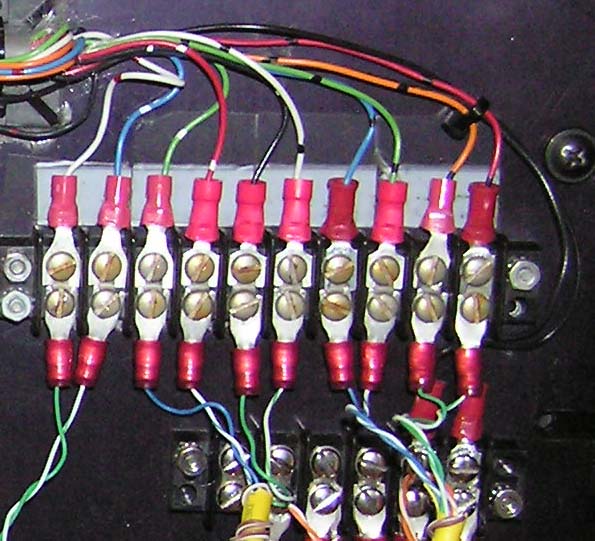
A tally is not a computer message. It is a contact closure: a pair of wires inside the production switcher that close when a source is on the program bus and open when it comes off. The switcher doesn’t know or care what is on the other end of those wires. In the studio it is a lamp. In the rack room it can be anything that understands “closed” and “open.”
It is worth separating tally from its cousin, the GPI (general purpose interface). Both are closures, and in a control room they often ride the same cables, but they say different things. A GPI is usually a pulse: the director fires it on a transition and it means do something now. A tally is a state: it stays closed as long as the source is on air and it means you are on air right now. That difference matters, and it is the reason the tricks below worked.

The Control Room Before Servers
When stations had tape decks they would edit in one room and then run the tape to the playback room. The tape operator would cue up the tape and get ready to play it back on the air. There was lots of running back and forth.
In that world every piece of video on the air depended on a person loading the tape and pressing play at the right time. The director called it, the tape operator rolled it, the technical director took it. Three people, one clip. Sony Newsbase replaced the tape decks with a server.

Newsbase And The First Tally-Driven Playback
By 2003 Sony Newsbase was the playback system at nine Tribune stations: WGN-TV, CLTV, KTLA, KSWB, KHWB, KDAF, WXMI, WLVI and WPIX.

The first Newsbase launch was stressful, but not where you’d expect. The pressure was on the editors. They were going from tape-to-tape editing to digital files and desktop editing in a single cutover, and that’s where the training, the rehearsals and the late nights went.

Playback was the easy part. It was so easy that, on launch day, somebody forgot to tell the tape playback operator. All week the rehearsals had run without the decks, and nobody had noticed. Whoever first wired a tally to the server saw that there was no reason for a person to press play on something a switch could start.
The server solved storage. It didn’t solve timing. Someone still had to tell each channel when to play and that is where the tally came in. The ENPS rundown built the order of the clips and assigned the playback channels; the newsroom system pushed that order to the server using the MOS protocol. Sony Newsbase was our first MOS device in the company. The tally supplied the moment. When the technical director took the server channel to air, the switcher closed the tally and the clip played. A manual playback controller sat on the desk in case someone needed to fire a clip by hand, but most of the show ran on the tally.
That is the whole idea, and it is simple enough to miss: the act of putting a source on air became the command to run it. The list came from the newsroom. The timing came from the switcher. Nobody had to be told twice.


Graphics Got The Same Treatment
With video playback solved by tallies, the graphics playlist was next on the list. Graphics were loaded manually, and operators sometimes used dedicated keyboards to create or advance them. I remember the Paintbox, which we used for stills, had to be loaded and stacked by hand before the show. The character generator was loaded from an ENPS rundown but was sometimes controlled and modified with a custom keyboard. Both had to be run by hand during a live newscast.

This all changed when we introduced DekoMOS graphics in 2003.
DekoMOS allowed the producer to create the graphic in ENPS, preview it, and then drag it into an ENPS script that was in an ENPS rundown. This rundown would be MOS active and would appear in the Deko playback controller. All the stations had four channels of graphics. Each channel had a Burst Electronics GPI connection to the Deko Playlist. When graphic channel one went to air the tally triggered the graphic event. When it went off the air it loaded the next graphic for that channel. Each channel had a Tally assignment.

All this automatic triggering of the playlist was set up ahead of time using the GPI assignment page. The assignments had to be configured so each trigger controlled the correct CG channel.

Tally was driving all the graphics channels during the show. X-keys were used to allow the director to clear a graphic or advance bullet points for full screens which never received a tally. All four channels of the graphics devices were identical so any graphic could air out of channel 1 through 4.

TONS: Taking It A Step Further
When Tribune built its own video system, TONS, we kept the tally approach and got more out of it. Because a tally is a state and not a pulse, it could carry more than one instruction.

- Tally high: played the clip.
- If the clip ended while the tally was still high: the channel froze on the last frame rather than going to black. A late take from the director showed a still, not a black frame.
- Tally low: ejected the clip and loaded up the next clip in the playlist.
- Tally Protect: a button on the playback controller that told TONS to ignore the tally — useful for a show open with trailing audio.
Below the operator would focus on the playing clip with the yellow bar but then could see the tally being triggered on the playlist. The button on the playlist or X-Key could turn off the tally if they wanted the clip to play after the tally low command. This was only done for show opens with trailing audio.


Just like Deko the tally configuration was all set up beforehand with the production team to go over all the mapping configurations.

Three behaviors from one pair of wires, and a button to override them. For manual playback we used X-keys, the programmable USB keypads, instead of a vendor control panel. It was a cheap solution, and it worked.

While many stations were still relying on manual playback, engineers were using tally-driven workflows to automate portions of the newscast years before integrated control-room automation became common. That combination was our automation system before we had an automation system. We were automating playback before automation arrived.
What Automation Software Actually Did
When automated production systems came into the control room, they were sold as something new, and in fairness they did a great deal more: they ran the switcher, the audio, the robotics and the graphics from a single timeline. But at the core was an idea we had already been using with relay contacts: one production event could trigger the actions associated with the next. The software just owned more of the chain.

Why It Matters Now
As more stations adopt full production automation, the art of using tallies to drive a newscast has mostly been lost. Tally panels and GPI patch fields get pulled out during renovations and nobody photographs them, because nobody thinks of them as history. The engineers who wired them retire.
The technology has evolved beyond simple tally closures. Today, much of that work happens in software on a PC, using APIs and open control protocols. There are still clever ways to automate parts of a newscast that don’t require a full automation system at all. The tools are different, but the instinct is the same one we had: find the signal that’s already there and let it do the work.
The next time someone describes a new production system as a breakthrough, it is worth remembering that a lot of it was working twenty-five years ago on two wires and a closed contact.
The machinery changed. The idea didn’t.

None of the systems described here are in service today. This is a record of how control rooms worked before automation software, drawn from my own installs and photos.
Chris Hutchins is a broadcast technology professional with thirty years of experience managing infrastructure across television station groups. He writes about the intersection of legacy broadcast operations and emerging AI tools. All photos were taken by Chris Hutchins at Tribune television and newspaper locations over the years. Linkedin profile


Leave a Reply