
A few inches off the ground
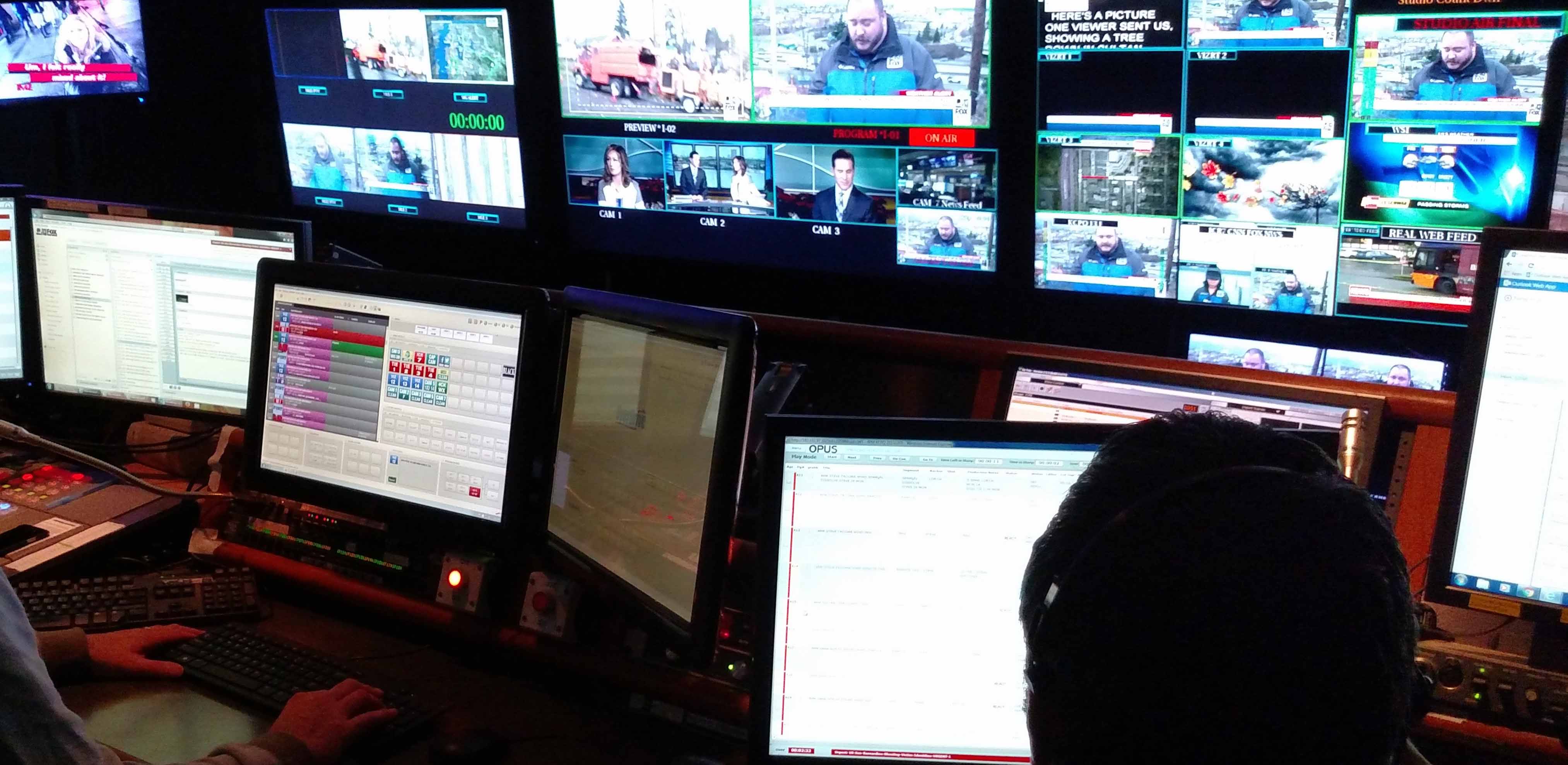
On November 20, 2010, WXMI in Grand Rapids, Michigan, put its newscasts on the air from a newsroom system Tribune had written itself. It was called Opus. The goal that night was modest: get it a few inches off the ground.
It wasn’t finished. You couldn’t edit anything on the face of the rundown. There was no lab and no test team, so the only real test was on the air, with the developers sitting in the newsroom fixing what broke.
Within a year, Opus was running in 28 newsrooms.

Every newscast starts as a list. Before a camera is turned on, a producer builds the rundown: every story in order, how long it runs, who reads it, and the video and graphics it needs. That list lives in a newsroom computer system. For more than a decade, Tribune’s stations had licensed ENPS from the Associated Press. With Opus, the company decided to build rather than buy. After building its own video system, TONS, Tribune compared what it paid for ENPS with what building a newsroom system might cost, and took the gamble. Today, AI is changing what it takes to build software. In 2010, it took a small team, a deadline and a newsroom willing to go first.

Twenty years of other people’s systems
We didn’t start Opus from a blank page. I started my career at WGN-TV in Chicago, Illinois, on DOS NewStar, a green text screen and a keyboard, and the Washington Bureau ran it too. Then came more than a decade on ENPS, which tied every Tribune station to one central server in Tribune Tower. When KPLR in St. Louis, Missouri, joined the group, it brought a third system, NewsKing.

The idea of building our own went back even further. In October 1996, while I was an assignment editor at the Washington Bureau, I was picked for a company team on an editorial authoring system. One option on the table was a single editorial system for every part of the company: newspapers, TV stations and the digital groups. I helped draft a design for print and broadcast together. The print side never came together. The TV side kept going, and fourteen years later Tribune built its own system for its TV stations: Opus.
We also learned from other groups. We worked closely with Hearst-Argyle on ENPS and graphics, trading ideas between our stations and theirs. And in June 2007, I sat in a room at ESPN’s campus in Bristol, Connecticut, with ESPN, WABC in New York, Hearst-Argyle and two Canadian broadcasters, comparing problems connecting our newsroom systems to graphics, video servers and automation. If the graphics failed in the middle of a show, switching them off took the prompter down too. None of us wrote our own fixes; every improvement waited on a vendor.
By 2010, we had spent years working with different newsroom systems and comparing workflows with other broadcasters. We knew what worked and what was missing. It was time to build our own.

The developers who built Opus had never worked in a newsroom. I had to explain why a newsroom can’t live without its wires, and why the assignment desk matters. But that outside view helped too. I had been heads down in newsrooms so long that I took their habits for rules, and the developers saw things I didn’t. Printing was one of them: they asked why a newsroom that lives in a browser needs paper at all.


Built for the browser
Opus ran in a web browser. The main page was HTML, and the rundown and scripts ran in Adobe Flash, which was then on nearly every desktop. Graphics systems and video servers connect to a newsroom system through small plug-in windows from each vendor, and most of those were ActiveX controls that ran only in Internet Explorer. We found workarounds to keep the existing plug-ins running and pushed vendors to develop browser-based replacements. TONS already had a web interface, so it didn’t need an ActiveX plug-in. By September 2015, Opus ran in Chrome as well as Internet Explorer, and that November it added Ross’s HTML5 plug-in for OverDrive.

Racing the license key
There was no time to wait for a finished product. ENPS ran on a license key, and when the contract ended, the clients would simply stop working. Every station had to be on Opus before that day.
Between November 2010 and November 2011, 28 newsrooms moved to Opus, 14 of them in the first four months. Producers from across the company trained at Tribune Tower, in a room I wrote about in Inside Tribune Tower. WGNO in New Orleans, Louisiana, was installed during Mardi Gras, a week before the ENPS contract expired.
Leaving ENPS meant leaving AP’s wires and graphics too, and news directors weren’t happy about it. By January 2011, Opus carried CNN’s wires and a new Tribune Wire, which let any station push an urgent update to the whole group. From then on, those were the stations’ only wire services. AP was gone.

Built in stages
Fixes went out every week that first winter. The prompter stopped jumping when an on-air story was edited. Graphics dropped into scripts on their own instead of being dragged in. Moving several stories between rundowns stopped reversing their order.
About a year after launch, Opus 2.0 brought the rundown that worked like a spreadsheet: click a cell, type, tab to the next. Because Opus was a website running PHP on Apache, there was nothing to install on anyone’s desk. A server update took about five minutes. We did it after the morning show, and the newsroom simply refreshed its browsers. The station’s super users trained everyone the day before.

By January 2012, one search could reach every station’s Opus. It returned scripts, TONS video and graphics side by side. Since TONS could play video from any station on the network, a producer in one city could find another station’s story and play its video.
It never stopped changing. Opus 3.0 followed in 2013 and Opus 4.0 in 2017, and between 2013 and 2018 the change log lists more than 60 numbered releases, usually rolled out a few stations at a time.

What we left out
One thing didn’t make the launch at all: an assignment desk. It was on the September 2010 list, and we built Opus without it anyway. Looking back, I can’t believe we did that. The stations didn’t wait. Our Denver station built its own assignment desk application, and it went out to a couple of other sites. It was very buggy, but it filled the gap until the company built an assignment desk into Opus in February 2017, more than six years after launch. I saw that again and again: if we didn’t build a tool, the stations would build it themselves.
Printing was deliberately given a low priority. It worked at launch, barely. If the newsroom system lives in a browser, why print? Stations printed anyway, for the anchors and the director. So in 2012 came iOpus, a tablet view of the rundown and scripts.

If Opus were built today
If Opus were built today, it would go faster. With AI, a project manager can read the code, understand how it works and help build new features without always waiting for a developer. Code changes that once took days or weeks can now be generated in minutes.
That has brought the build-or-buy question back across the industry. AI makes building cheaper, but building was never the hardest part. Support was. Opus ran in about 30 newsrooms, and when it broke at 5 a.m., the people who wrote it answered the phone. Software still needs a support team, a roadmap and people responsible for keeping it running. The code is the easy part now. Someone still has to answer the phone. For most broadcasters, that is still the best reason to buy.
But something would be gone. In 2010, every piece of that rundown was written by hand: the timing bar that followed the show, the story that floated without breaking the prompter, the read time worked out for each anchor. Someone sat down and figured out each one, line by line, and fixed it again when it broke on the air. That hand-coding craft was the magic of it. An AI can write the code now. It can’t give you the feeling of making that rundown work yourself.
One thing hasn’t changed. On November 20, 2010, the only real test was on the air. It still is.

Chris Hutchins is a broadcast technology professional with more than thirty years of experience managing infrastructure across television station groups. He writes about the intersection of legacy broadcast operations and emerging AI tools. LinkedIn profile
Leave a Reply